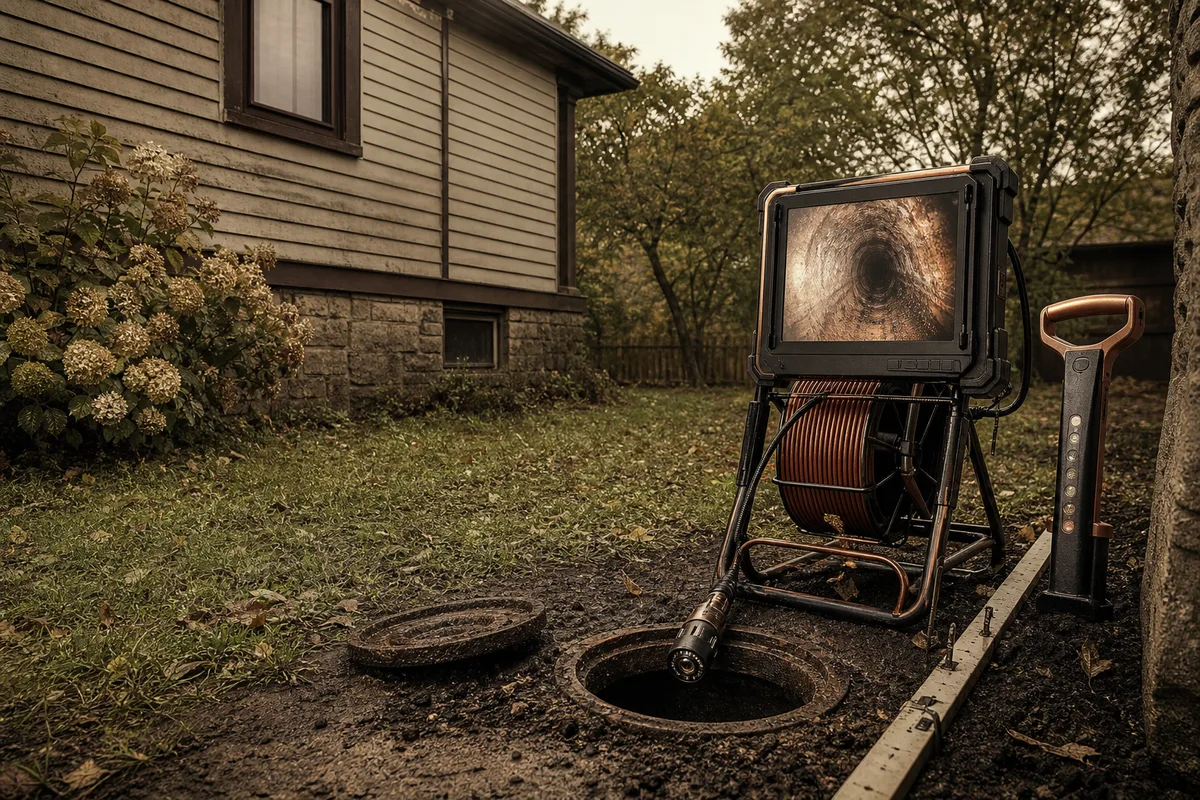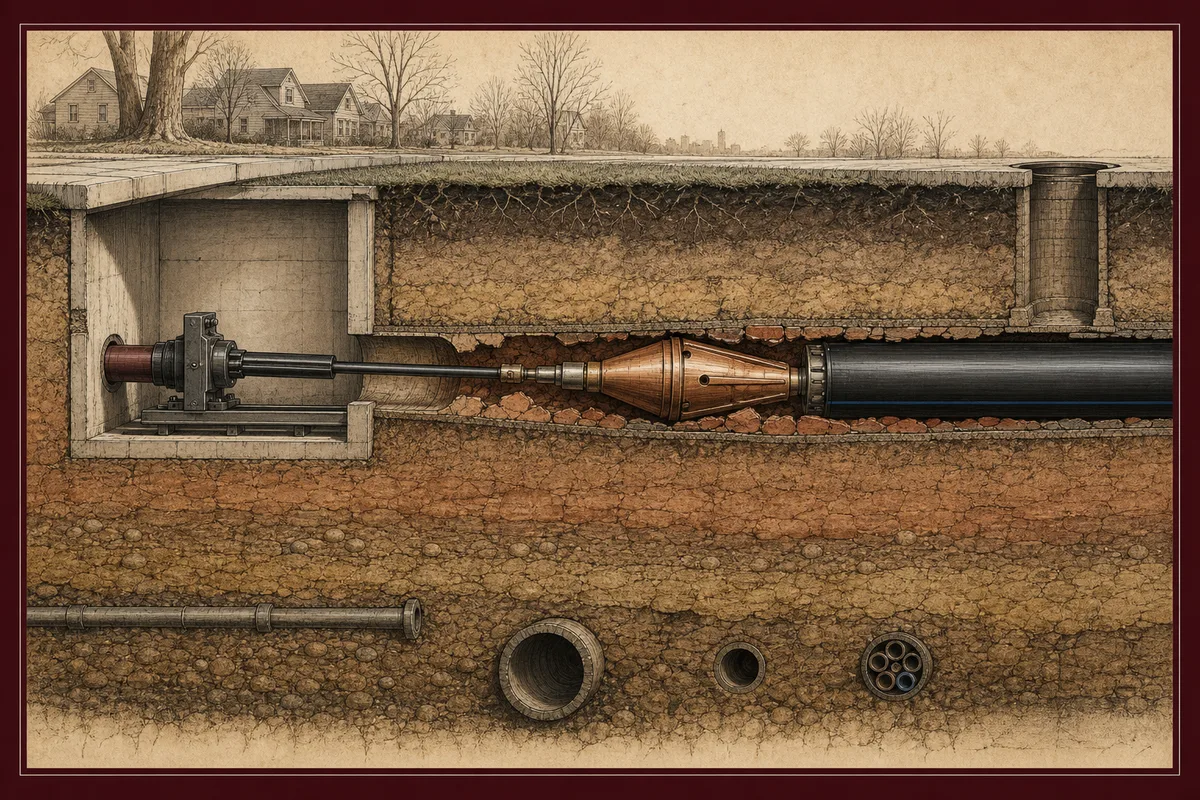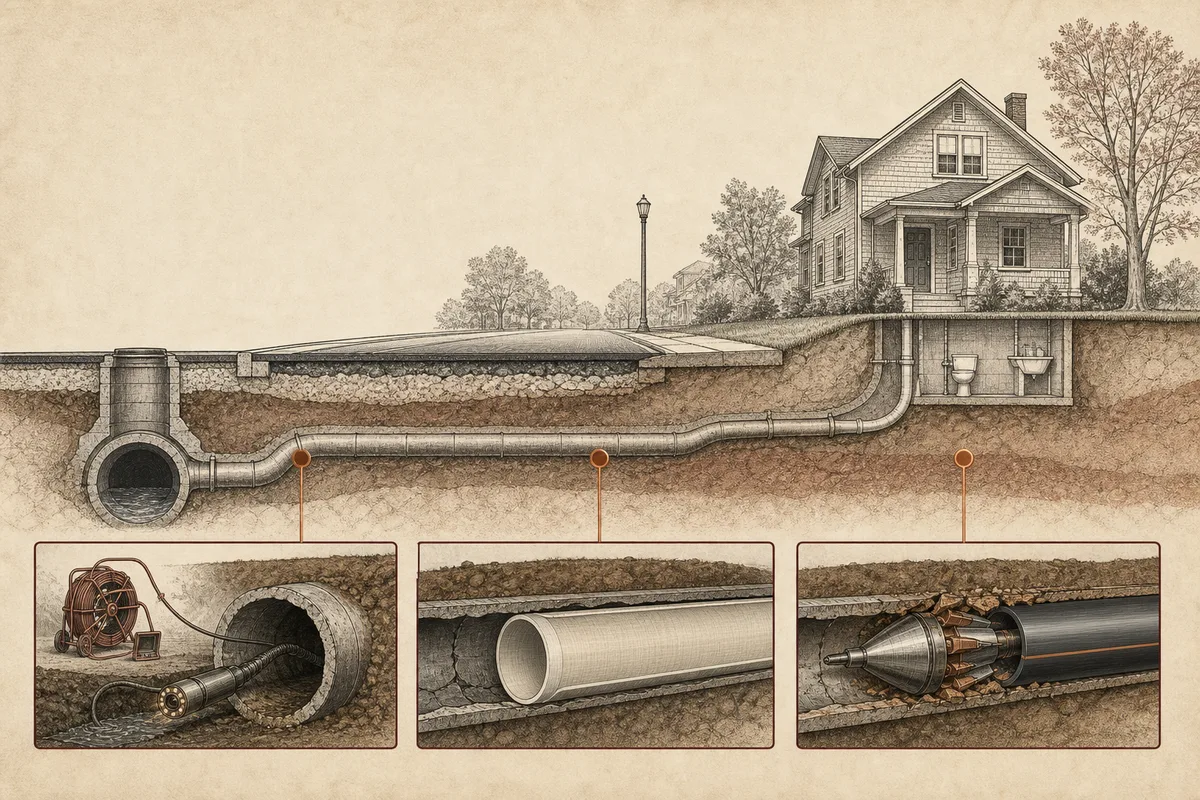
Amherst Elite Trenchless prepared this field note for Amherst-area property owners. A practical explanation of groundwater entry, improper inflow, camera findings, municipal rehabilitation, and private-lateral questions.
Infiltration and inflow are related but different
Infiltration is groundwater entering through defects such as failed joints, cracks, or deteriorated connections. Inflow is storm or surface water entering through direct pathways that do not belong on the sanitary system. Both can increase wet-weather flow, but the investigation and correction details differ.
Field questions to carry into the next step
Keep the property address, access point, pipe material, measured defect stations, unresolved survey limits, and the reason behind each proposed method. Compare complete scopes instead of comparing product labels. Ask who controls permits and inspections, what surfaces are restored, and what closing evidence will be delivered.
Build a simple evidence table with one row for each important station. Include the distance, visible condition, surface location, possible consequence, and the extra observation needed before a decision. Separate confirmed facts from assumptions. A property age can suggest likely materials, but only the exposed or recorded line identifies what is present. Rain timing can suggest infiltration or collection-system involvement, but it does not locate the defect.
Read every proposal beside that table. Check whether cleaning, locating, access, permits, branch connections, downtime, testing, closing footage, and restoration are included. If a bidder rules out a method, ask which recorded condition created that conclusion. If the proposed method changes in the field, require the new finding and revised scope in writing before the work expands.
A decision should remain conditional until the route and condition are documented. If the evidence changes after cleaning or locating, the scope should change with it. Retain the unedited source files, not only screenshots or a short summary. Future owners and service providers need the continuous record to understand what was inspected and what remained unseen.
Read the private lateral beside the public program
Amherst describes camera televising, root control, PipePatch repairs, and cured-in-place rehabilitation within its broader I&I work. That public program provides local context, but it does not replace an address-level decision about private ownership or the condition of one building sewer.
Field questions to carry into the next step
Keep the property address, access point, pipe material, measured defect stations, unresolved survey limits, and the reason behind each proposed method. Compare complete scopes instead of comparing product labels. Ask who controls permits and inspections, what surfaces are restored, and what closing evidence will be delivered.
Build a simple evidence table with one row for each important station. Include the distance, visible condition, surface location, possible consequence, and the extra observation needed before a decision. Separate confirmed facts from assumptions. A property age can suggest likely materials, but only the exposed or recorded line identifies what is present. Rain timing can suggest infiltration or collection-system involvement, but it does not locate the defect.
Read every proposal beside that table. Check whether cleaning, locating, access, permits, branch connections, downtime, testing, closing footage, and restoration are included. If a bidder rules out a method, ask which recorded condition created that conclusion. If the proposed method changes in the field, require the new finding and revised scope in writing before the work expands.
A decision should remain conditional until the route and condition are documented. If the evidence changes after cleaning or locating, the scope should change with it. Retain the unedited source files, not only screenshots or a short summary. Future owners and service providers need the continuous record to understand what was inspected and what remained unseen.
Use rain timing as evidence, not a diagnosis
A backup or slow system that correlates with heavy rain is useful history. It does not prove the defect is on the private line. Record which fixtures were affected, whether neighbors were affected, rainfall timing, cleanout behavior, and any municipal notice.
Field questions to carry into the next step
Keep the property address, access point, pipe material, measured defect stations, unresolved survey limits, and the reason behind each proposed method. Compare complete scopes instead of comparing product labels. Ask who controls permits and inspections, what surfaces are restored, and what closing evidence will be delivered.
Build a simple evidence table with one row for each important station. Include the distance, visible condition, surface location, possible consequence, and the extra observation needed before a decision. Separate confirmed facts from assumptions. A property age can suggest likely materials, but only the exposed or recorded line identifies what is present. Rain timing can suggest infiltration or collection-system involvement, but it does not locate the defect.
Read every proposal beside that table. Check whether cleaning, locating, access, permits, branch connections, downtime, testing, closing footage, and restoration are included. If a bidder rules out a method, ask which recorded condition created that conclusion. If the proposed method changes in the field, require the new finding and revised scope in writing before the work expands.
A decision should remain conditional until the route and condition are documented. If the evidence changes after cleaning or locating, the scope should change with it. Retain the unedited source files, not only screenshots or a short summary. Future owners and service providers need the continuous record to understand what was inspected and what remained unseen.
Close the loop after repair
A private repair should preserve pre-work and post-work footage at the same stations. If the purpose is to reduce groundwater entry, the closing record should identify the sealed joints, rehabilitated segment, or replaced connection rather than only showing that water currently flows.
Field questions to carry into the next step
Keep the property address, access point, pipe material, measured defect stations, unresolved survey limits, and the reason behind each proposed method. Compare complete scopes instead of comparing product labels. Ask who controls permits and inspections, what surfaces are restored, and what closing evidence will be delivered.
Build a simple evidence table with one row for each important station. Include the distance, visible condition, surface location, possible consequence, and the extra observation needed before a decision. Separate confirmed facts from assumptions. A property age can suggest likely materials, but only the exposed or recorded line identifies what is present. Rain timing can suggest infiltration or collection-system involvement, but it does not locate the defect.
Read every proposal beside that table. Check whether cleaning, locating, access, permits, branch connections, downtime, testing, closing footage, and restoration are included. If a bidder rules out a method, ask which recorded condition created that conclusion. If the proposed method changes in the field, require the new finding and revised scope in writing before the work expands.
A decision should remain conditional until the route and condition are documented. If the evidence changes after cleaning or locating, the scope should change with it. Retain the unedited source files, not only screenshots or a short summary. Future owners and service providers need the continuous record to understand what was inspected and what remained unseen.
Primary references used for this field note
Use the camera inspection checklist, compare all repair methods, or send the property context for review.
Common Questions
What should I keep from a sewer inspection?
Keep the complete video, access location, distance record, material and defect notes, survey limitations, and any written recommendation.
How does this local guide field note apply to one property?
Use it as a comparison checklist. The property route, serving system, current camera evidence, and local requirements still need to be confirmed.
Can a website determine the correct repair method?
No. The property and pipe need to be inspected. These field guides help owners compare the evidence and scope they receive.
When should a proposal be revised?
Revise the written scope when cleaning, locating, access, or inspection reveals a condition that changes the selected method, work zone, or restoration.