Amherst Elite Trenchless publishes camera-led planning guides for Amherst-area property owners. This field note breaks down what actually changes a sewer repair bid, so a homeowner can read two competing proposals and tell which differences are real and which are just different ways of hiding the same scope. It is a companion to the Amherst sewer repair cost guide, built around the questions that come up most often once a camera inspection is in hand.
Camera findings change a bid more than the property’s age does
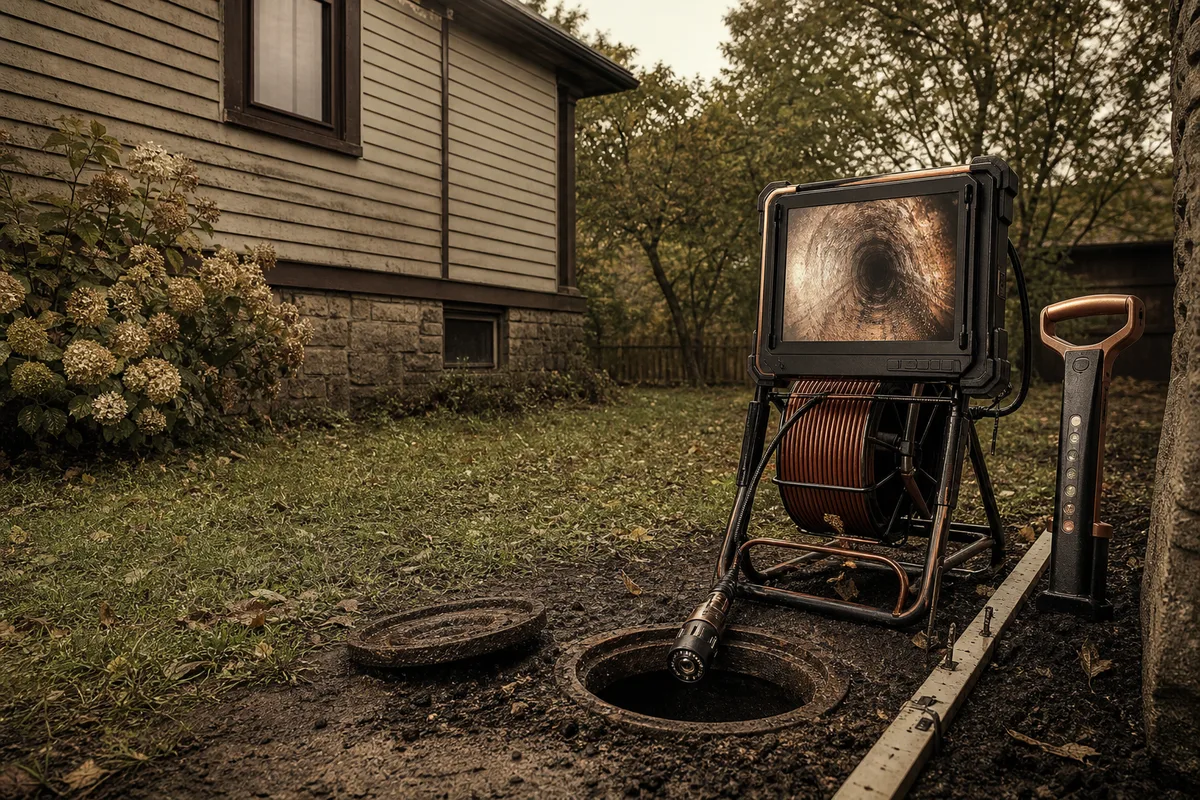
A property’s construction era can suggest what pipe material is likely in the ground, but it does not set the scope of a repair. A camera inspection does that by turning a backup, a slow fixture, or a failed purchase inspection into a specific defect map: material, diameter, the distance to each defect, and the portion of the line that could not be viewed. Two houses built the same year on the same street can need very different repairs once the camera shows one line with a single joint leak and the other with a flattened, root-choked section. Read every proposal against that same footage, and ask a bidder to point to the station on the video that justifies the recommended method rather than a general statement about the neighborhood.
Access and length are the first two numbers that matter
Once the defect map exists, access and length are usually the first drivers that separate a simple job from a complicated one. A line reachable from an existing cleanout with a short run to the defect is a different undertaking than one that needs a new access point dug through a finished surface, a long run to reach the repair zone, or equipment staged around a tight side yard. Depth adds to that picture: a shallow line under lawn is easier to reach than a deep line under a driveway or a mature tree’s root system. None of these variables appear in a flat per-foot number, which is why a proposal that quotes a single rate for the whole job is harder to compare than one that breaks access, length, and depth into separate line items.
Cleaning and prep decide how much of the pipe is actually known
An obstructed camera pass, one blocked by grease, scale, roots, or standing water, can hide the real condition of the pipe wall. A thorough proposal separates the first obstructed pass from a later clean-pipe pass, because a line that looks severely damaged before cleaning can turn out to be a good candidate for trenchless pipe lining once scale or roots are removed and the host pipe’s actual geometry is visible. Skipping that clean-pipe confirmation step can push a bid toward a more invasive method than the pipe actually needs, or in the opposite direction, toward a lining proposal on a pipe that cannot really support one. Ask whether a quoted scope is based on the obstructed footage or the clean-pipe footage, and treat any recommendation made before cleaning as provisional.
Lining versus bursting is a scope decision, not a price tier
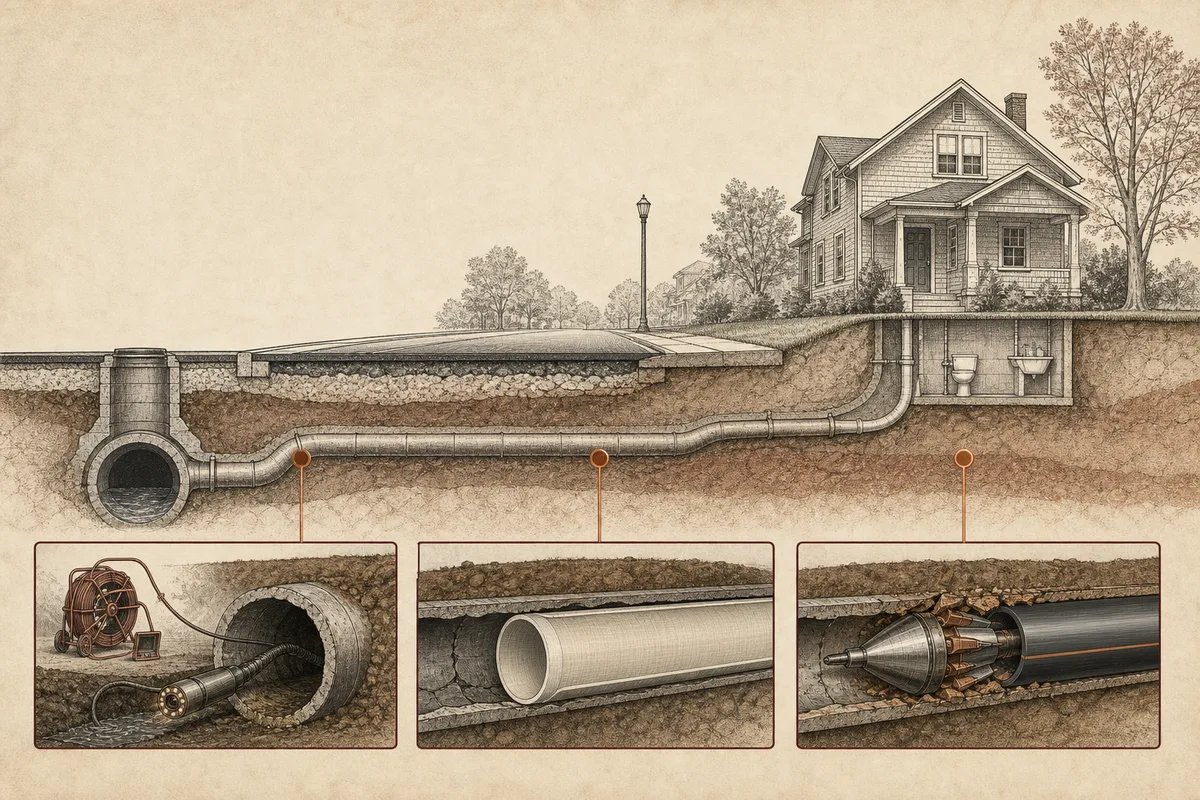
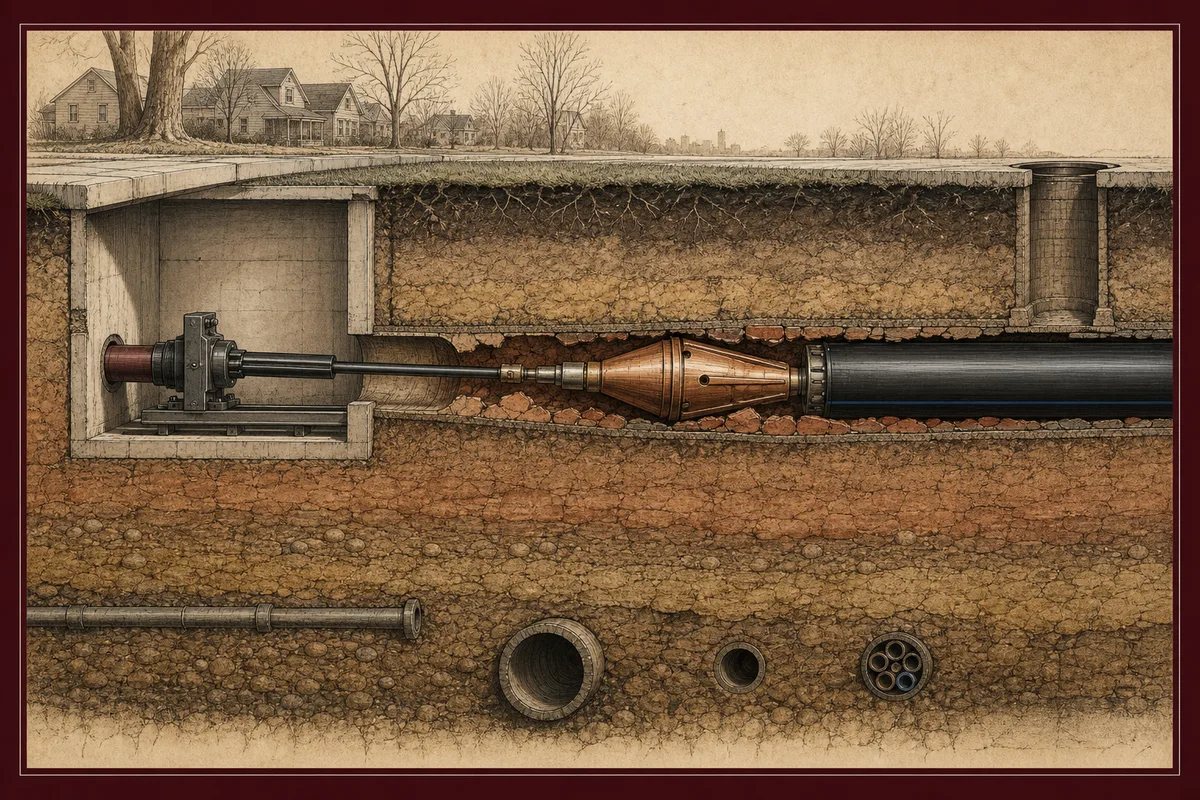
Cured-in-place lining and pipe bursting solve different problems, and the choice between them should come from the recorded condition, not from which one a particular bidder tends to sell. A liner needs a host pipe that still holds a usable, roughly round shape; it restores the inside of a pipe that has joint leaks, root openings, hairline cracks, or interior corrosion. Epoxy pipe lining is one resin option within that lining process, often chosen for its lower odor during cure on occupied properties. Pipe bursting replaces the pipe itself and can handle a collapsed or badly deforming run, but it needs launch and receiving pits, workable utility clearance, and enough room to maneuver equipment. A bid that recommends one method should explain which recorded defect ruled the other one out, and a bid that recommends excavation instead of either trenchless method should explain what made both of them unworkable.
The fork between a liner candidate and a collapse
The clearest cost fork in a sewer repair scope is the difference between a cleanable defect and a structural collapse. A joint leak, a root opening, or interior corrosion on an otherwise round pipe keeps the trenchless options open. A full collapse, a missing section of pipe wall, or severe ovality removes lining as an option and can limit bursting as well, pushing the scope toward a conventional repair. That distinction should be stated plainly in the written scope, with the specific station and camera evidence that supports it, not inferred from a general description like “the pipe is old.”
Permits, restoration, and the items that hide in exclusions
Permits, inspection scheduling, traffic control, spoil handling, and surface restoration rarely show up as the headline item in a proposal, but they can be the difference between two bids that otherwise look similar. The Town of Amherst sanitary sewer I&I program and the Erie County sewer forms library are useful starting points for confirming what a specific address needs before work begins. A proposal that excludes permit filing, restoration of a driveway or walkway, or the branch reinstatement needed after a liner cures can look smaller on paper while leaving the homeowner to absorb those costs separately once work starts.
A comparison checklist for reading trenchless proposals side by side
Put every proposal through the same set of questions before comparing them to each other:
- Is the recommendation based on an obstructed pass or a clean-pipe pass?
- What specific station and defect justified the chosen method?
- Is cleaning, locating, and branch reinstatement included or provisional?
- Who obtains the permit, and who schedules inspection?
- What surfaces get restored, and is that restoration included?
- What closing record, camera footage or a test report, confirms the work matches the scope?
- What happens if cleaning or excavation reveals a worse condition than expected?
A proposal that cannot answer most of these questions in writing is difficult to compare fairly with one that can, no matter which number appears first on the page.
What to keep after the work is scoped and completed
Keep the pre-work camera record, the written and signed scope, any permit or inspection paperwork, the method and material details, and a closing camera pass that shows the finished repair at the same stations recorded before work began. For a property near East Amherst or anywhere else in this service area, that file travels with the property and makes a future sale, refinance, or warranty question far easier to answer than a verbal description of what was done.
Request a cost-driver review for your Amherst property
Send the property address, existing camera footage if available, symptoms, and access concerns through the review form, or call 716-274-7351 to discuss the property directly. This site provides planning information and routes requests; a qualified local provider must inspect the property before issuing a final scope.
Common Questions
Why do two bids for the same Amherst sewer repair look so different?
They are usually scoped against different assumptions, not different prices for the same work. One bid may include cleaning, locating, branch reinstatement, and surface restoration, while another leaves those items as a provisional allowance that only applies if a condition is found. Compare the written scope, not the headline number.
Does a longer sewer line always cost more to repair?
Length is one driver, but depth, access, pipe diameter, the amount of cleaning required, and the method all interact with it. A short, deep run under a driveway can take more effort than a long, shallow run with easy access, so length alone does not set the scope.
Is trenchless repair always the cheaper option?
Not automatically. A trenchless method can avoid a long open trench, but it still has its own preparation, equipment, and access requirements. The least disruptive method is not always the lowest-effort one once its prerequisites, like a cleanable host pipe or workable pit locations, are accounted for.
What single document would most help compare sewer repair proposals?
A complete, unedited camera record with measured stations. Every other part of a proposal, the method chosen, the cleaning required, the access plan, should trace back to what that footage actually shows rather than to a general assumption about the property's age.
Should a homeowner accept the first proposal that recommends lining over bursting?
Not without asking why. A proposal should explain which recorded defect ruled out the other method, not just state a preference. If two bidders reach different conclusions from the same footage, ask each one to point to the specific station that drove the decision.